
Catheter priming volume calculator
Enter the lumen inner diameter and the length. The tool returns the internal volume of the catheter, and the total dead space once you add the port.
Calculate
A TaperCath transition runs about 1.5 cm. The taper is treated as a cone between the two diameters, which is an approximation, not a measured figure.
A Cath-In-Cath 2 runs from 15 µL. Ask us for the figure on any part number.
Used for the total fill volume across a cohort.
How it is calculated
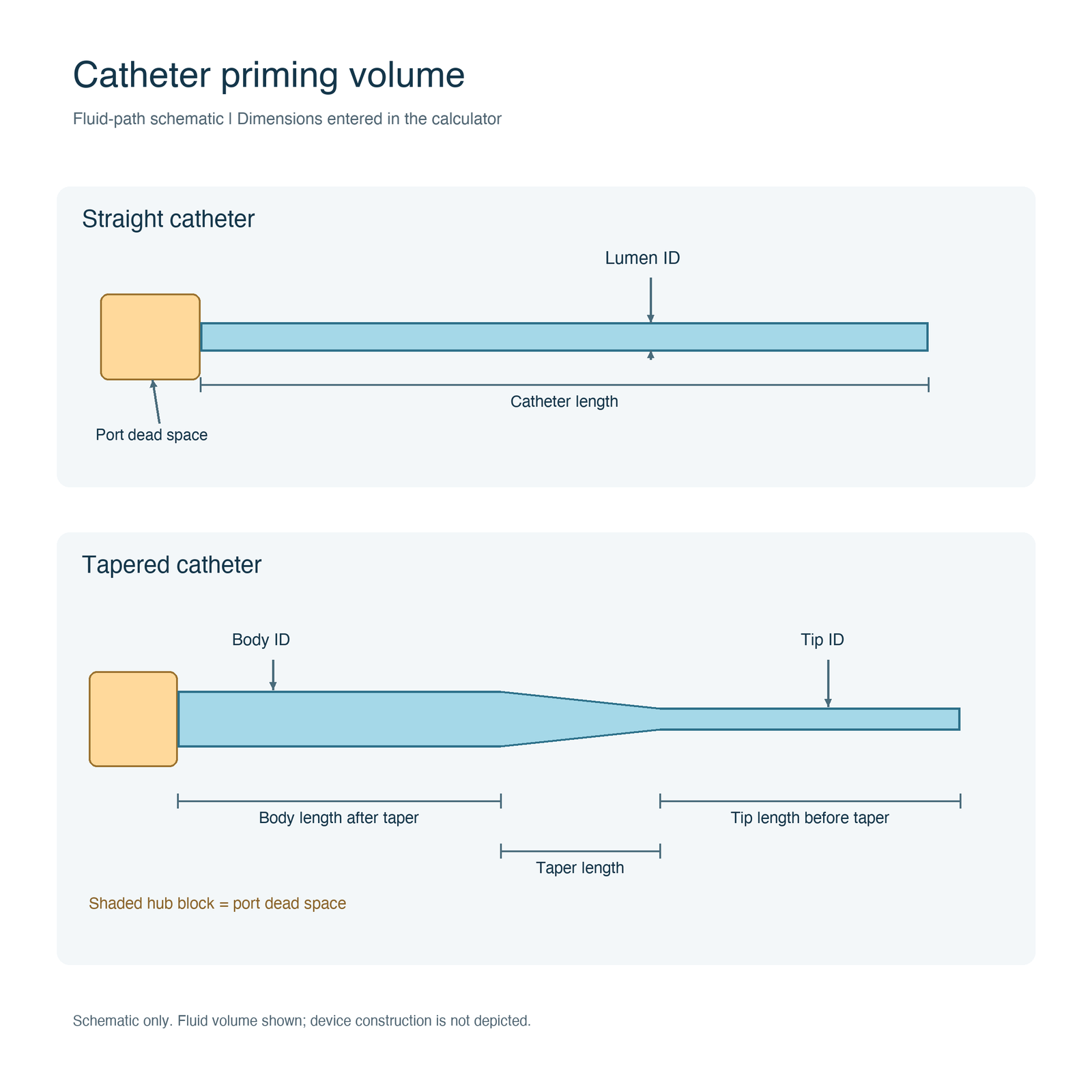
The lumen is treated as a smooth cylinder, so the internal volume is the cross-sectional area times the length.
V = π × (ID ÷ 2)2 × L
With the inner diameter in millimeters and the length in centimeters, the result in microliters is V = π × (ID ÷ 2)2 × L × 10, because one cubic millimeter is one microliter.
What the number does not include
- Tubing wall tolerance. Published inner diameters are nominal, and real volume moves with the tolerance band.
- Stepped or tapered catheters, where the lumen changes along the length. Calculate each segment and add them.
- Extension sets, stopcocks, filters and the pump line, all of which carry their own volume.
- Compliance. Flexible tubing expands slightly under pressure during infusion.
Use this to plan a protocol, not to certify a dose. For a figure tied to a specific part number and lot, ask us.
Why dead space decides low-volume studies
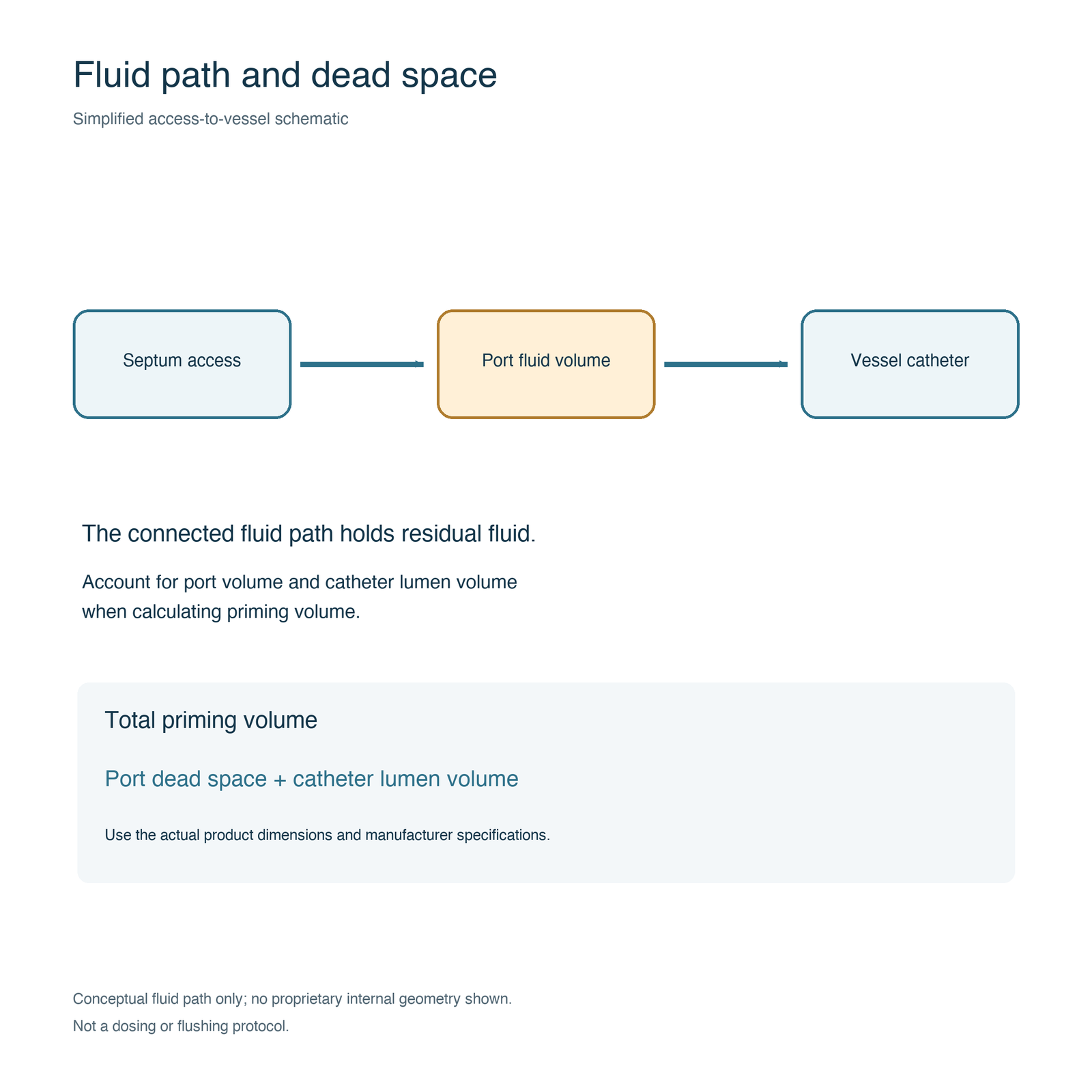
Every microliter between the septum and the vessel holds drug from the previous access or lock solution from the last flush. In low-volume dosing that is not a rounding error, it is the difference between the dose you calculated and the dose the animal received. It is one of the failure modes we see most often.