
Rabbit infusion and sampling systems
Ambulatory and tethered infusion in smaller species
Rabbit work sits in an awkward middle: too large for rodent hardware, too small for large-animal pumps. We have built ambulatory systems for species as small as 1 kg, including Dutch Belted rabbits, marmosets and African Greens.
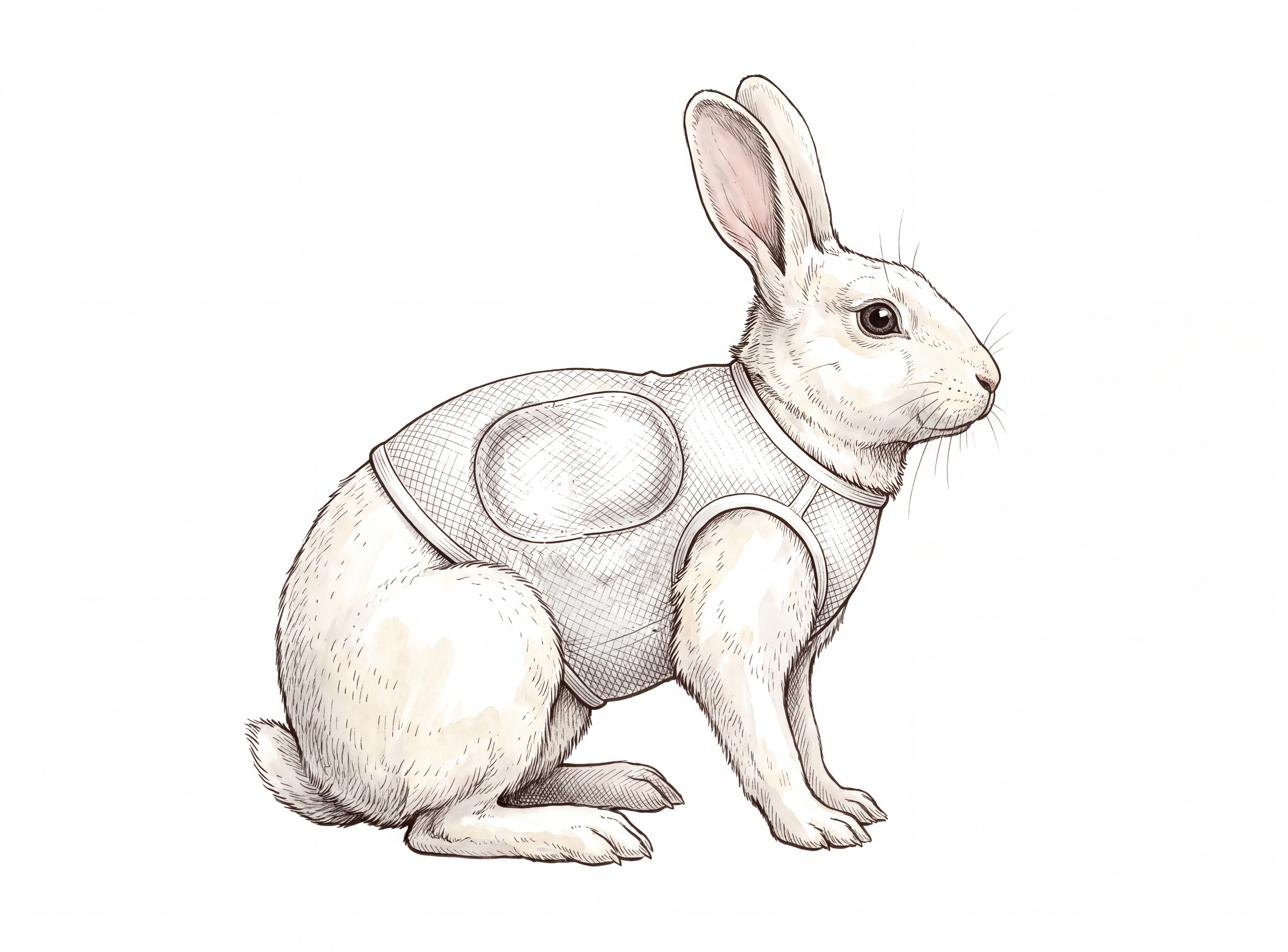
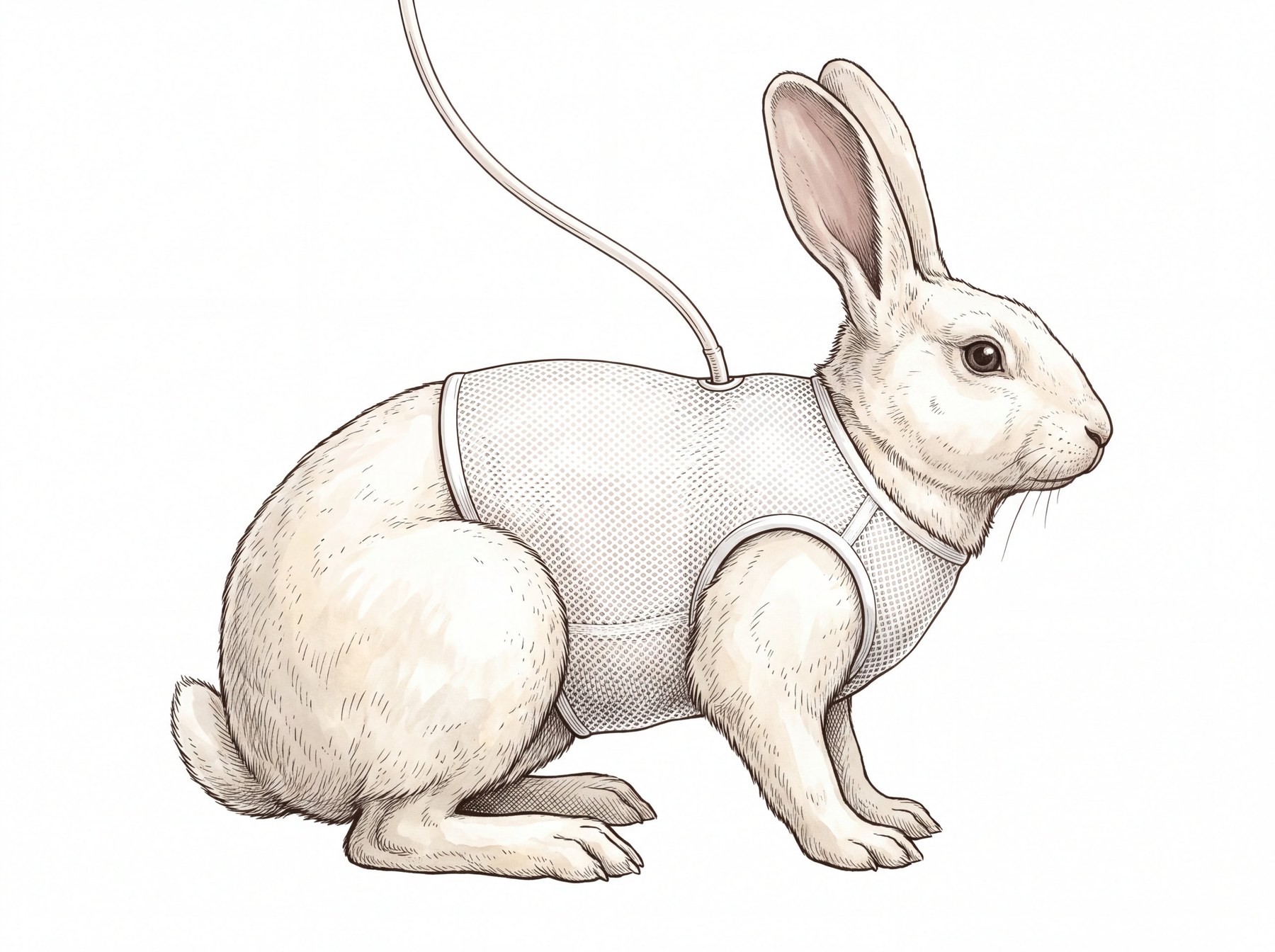
Ambulatory system
The pump rides on the animal in a jacket. No tether, no swivel, and the animal is free to move in its normal housing.
| Component | Specification |
|---|---|
| Access port | Cath-In-Cath 2, 3 Fr to 5 Fr |
| Infusion pump | 6000 CMS, AB-6000 |
| Infusion set | Cath-In-Cath infusion set, CIC-20G |
| Reservoir | Drug bag or cassette, sized to the protocol |
| Jacket | Rabbit jacket, sizing on the jackets page |
Tethered system
The pump sits outside the cage and the line runs through a swivel, for higher flow rates, larger reservoirs and studies that run longer than a jacket-mounted reservoir allows.
| Component | Specification |
|---|---|
| Access port | Cath-In-Cath 2, 3 Fr to 5 Fr |
| Infusion pump | CURLIN 8000 CMS, AB-8000CMS, or 6000 CMS, AB-6000 |
| Infusion set | Cath-In-Cath infusion set, CIC-20G |
| Swivel and tether | Large animal tether, 18 ga swivel |
| Jacket | Rabbit jacket, sizing on the jackets page |
Smart pumps with remote monitoring are available. We assess your requirements individually and design the tethered system around them.
The problems we design around are the ones that end rabbit studies early: inadvertent disconnect, dead space, pump weight and accuracy.
Other access routes
Vascular access is the common case. These are built to protocol for rabbit work on the same catheter platform.
- CSF and intrathecal. CSF collection and CNS dosing, with the IntraPort, matched catheters and introducer
- Duodenal. Enteral dosing and absorption work, catheter built to the route
- Bile. Bile collection with a T-tube occluder configuration
- SubQ and IP. Subcutaneous and intraperitoneal configurations on request