
Infusion pumps
Three pump platforms cover the large majority of laboratory infusion needs: two ambulatory options and a stationary dual syringe pump for tethered rodent work. A fully implantable pump is in development.
Start here
Four pumps. Choose by how the animal moves and how much you need to deliver.
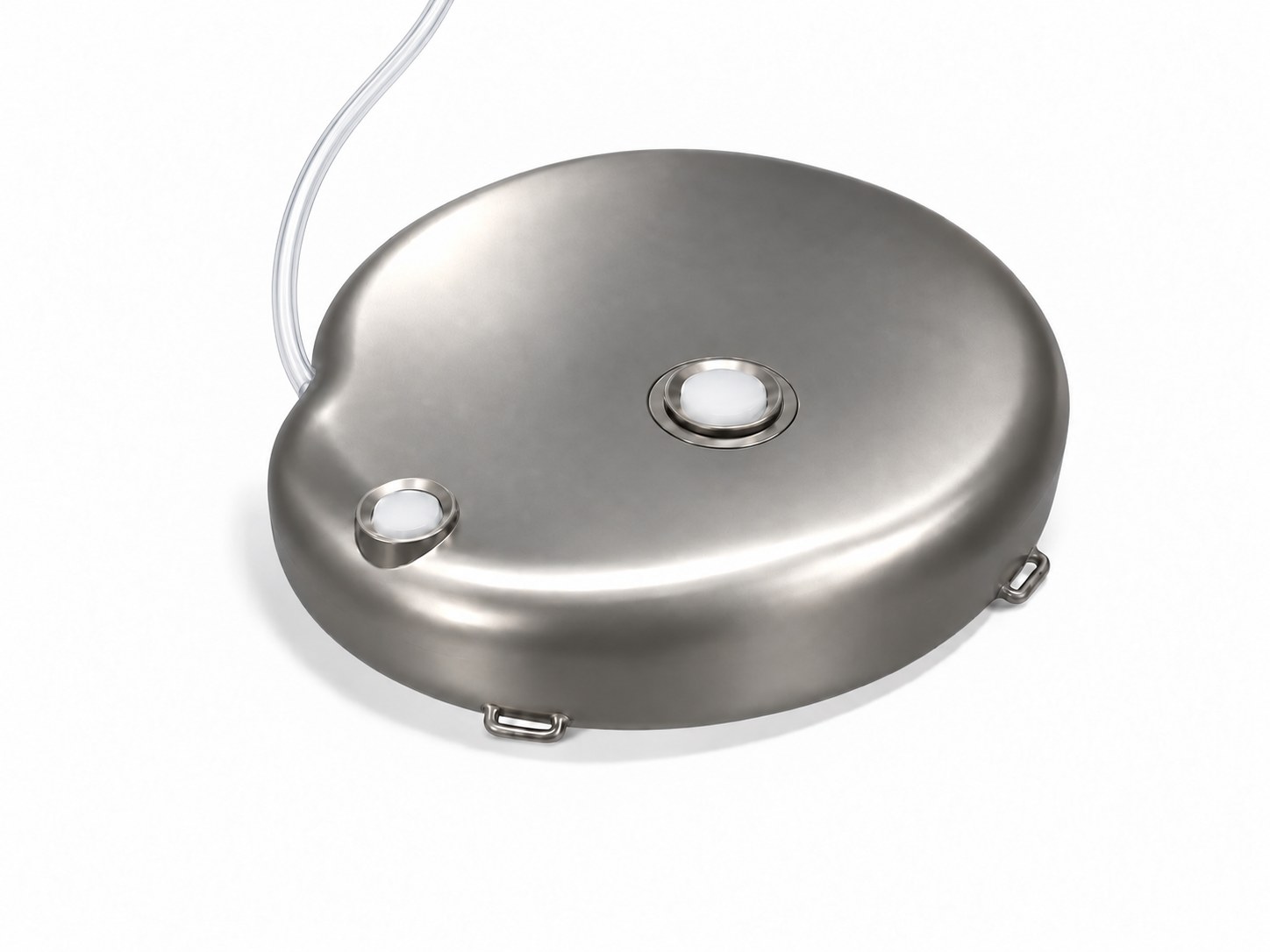
Implantable titanium pump
Fully implanted titanium pump. No external hardware, no exit site, nothing for the animal to defeat.
In development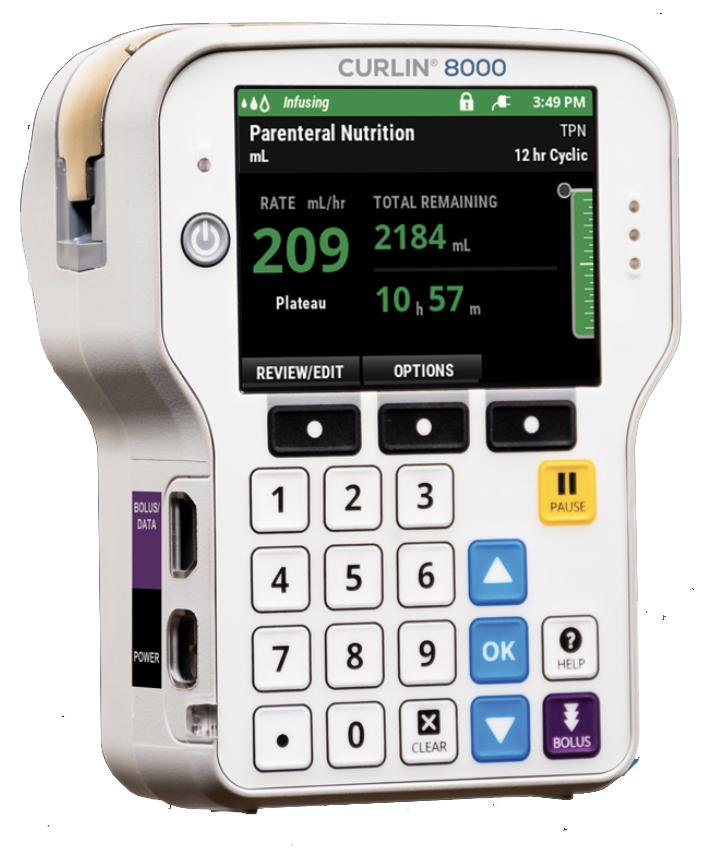
CURLIN 8000
High-flow multi-therapy ambulatory pump for larger species and higher volumes. Uses 380 series sets.
Ambulatory · high flow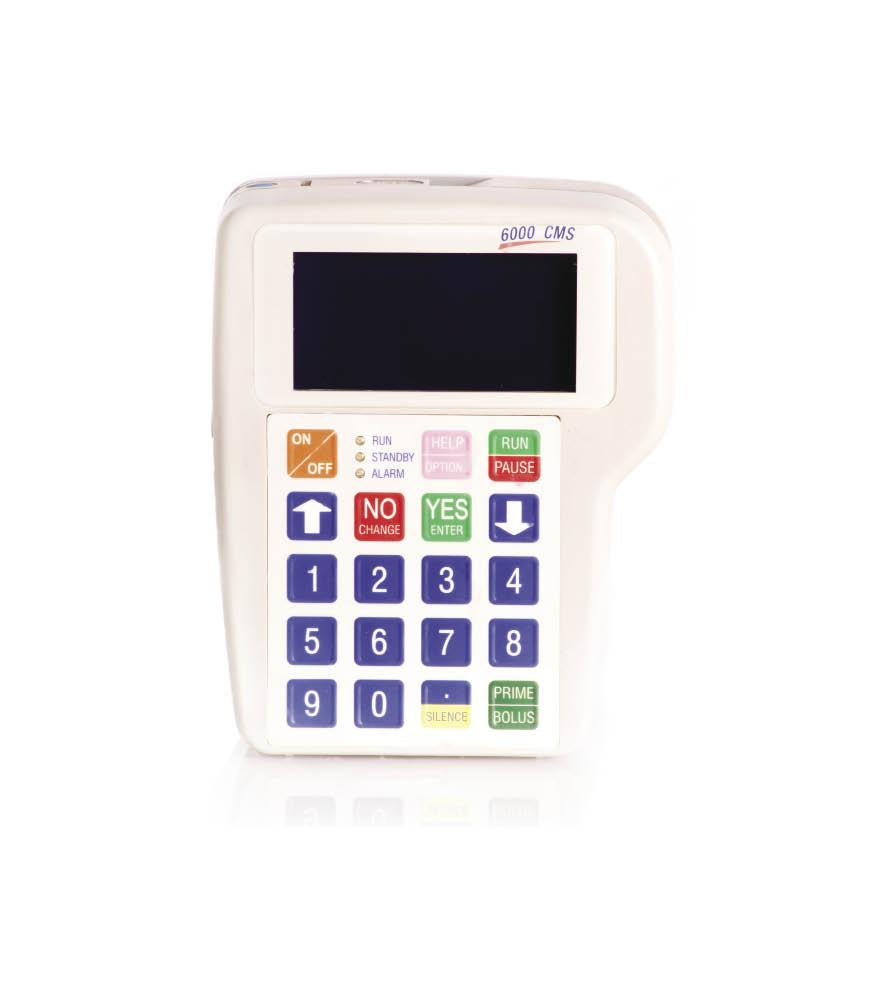
The 6000
Multi-therapy ambulatory infusion pump, the workhorse of the published record. Uses 340 series sets.
Ambulatory · multi-therapy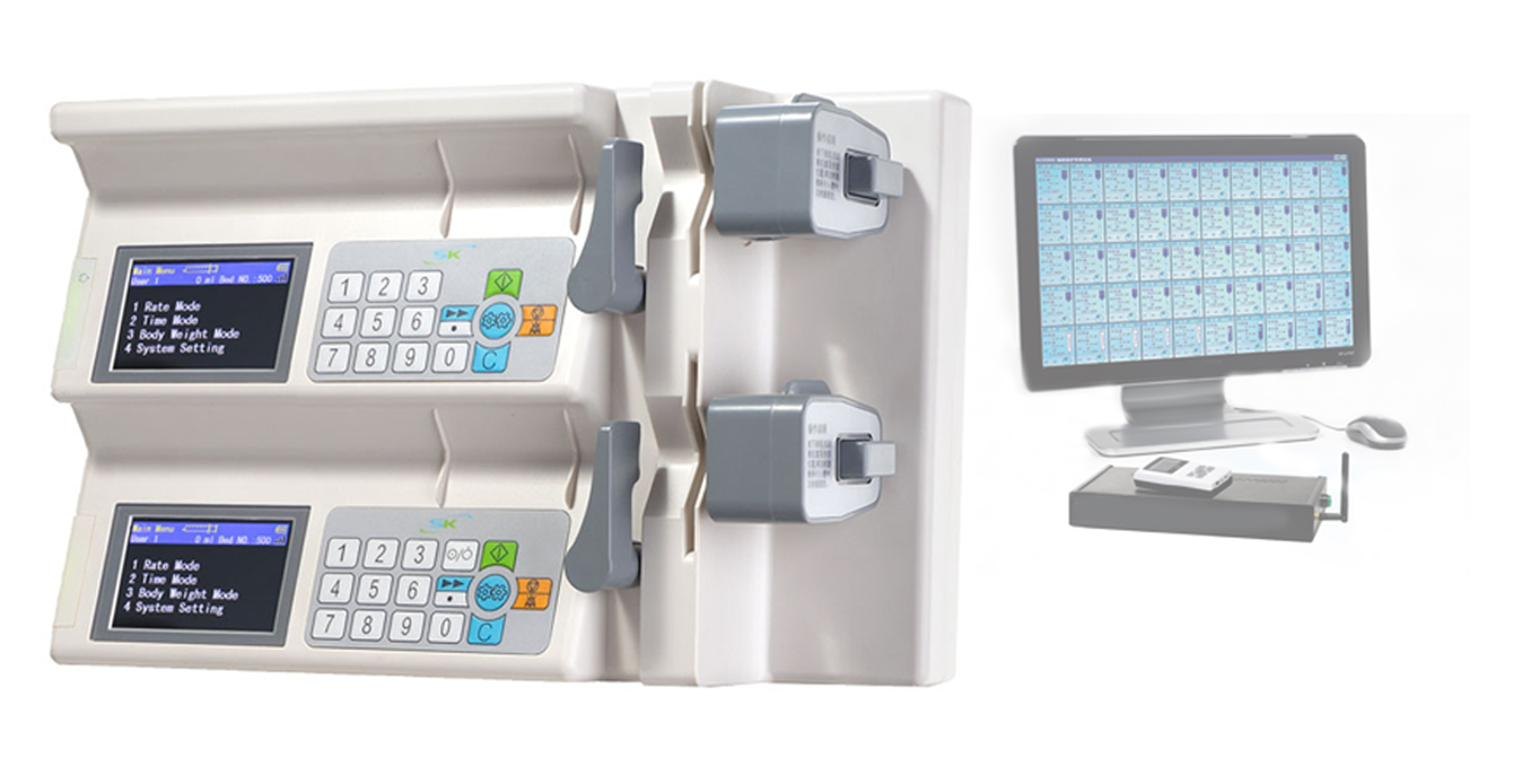
AVA ST DL
Wireless dual syringe stationary pump for bench and tethered work, with remote monitoring.
Stationary · dual syringeNot sure which fits? talk to an engineer or a surgeon before you write the protocol, or see what actually ends studies.
Stock items generally leave within five business days, custom builds in about two weeks.
A clinical pump, and someone who has run it in an animal
Buy an infusion pump through a medical supply channel and you get a device built for a hospital ward, shipped with a clinical manual: no protocol setup, no guidance on what these pumps do at research flow rates, and nobody to call when it alarms on day nineteen of a twenty-eight day infusion.
We are the only company putting these pumps in front of preclinical researchers, and the support is the reason.
- Programmed and checked against your protocol before it ships
- Verified as part of a system with your port, catheter and jacket
- Guidance on flow rates and volumes at research scale, not ward scale
- A person who knows the pump and the species when it alarms
Implantable infusion pump
We are looking for beta testers. Before general release we want a small number of groups running long duration large animal work to trial the pump and tell us where it falls short. Send the species, the compound, the flow rates and the study length. More on the program.
In development
A fully implantable, refillable electronic infusion pump for large animals, intended to remove the exit site from long-term studies. No percutaneous line, no daily site care, no tether to restrict the animal.
The design priorities: multi-year service life between procedures, programming and monitoring without handling the animal, and delivery precision at the low rates preclinical work actually runs at.
We are not publishing specifications while the design is being finalized. Tell us the species, the compound and the duration, and we will tell you whether it is a fit and when it is likely to be available.
CURLIN 8000 ambulatory infusion pump
High-flow delivery and advanced programming in one platform: continuous, intermittent, PCA, variable and TPN modes, flow from 0.1 to 500 mL per hour, accurate operation in any position.
- Multi-therapy programming in a single pump
- 0.1 to 500 mL/hr, from low-rate protocols to higher-volume large animal infusion
- Protocol-based programming through RxManager DERS, loadable as species-specific protocols
- Occlusion and air-in-line sensitivity configurable to the study
- Color display, status lights and on-screen help
- C-cell batteries, rechargeable pack or AC power
| Specification | Value |
|---|---|
| Order code | AB-8000CMS |
| Mechanism | Curvilinear peristaltic |
| Size | 5.5 × 4.3 × 2.75 in (13.63 × 10.99 × 5.93 cm) |
| Weight | 23.8 oz (674 g) with rechargeable battery 24.4 oz (691 g) with 2 C cells |
| Screen | 3.5 × 2.0 in color LCD, 320 × 240 px |
| Therapy modes | Continuous, PCA, TPN, intermittent, variable |
| Flow rates | Continuous, intermittent, variable: 0.1-500 mL/hr TPN: 10-500 mL/hr |
| Flow accuracy | 1-500 mL/hr: ± 5% 0.1-0.9 mL/hr: ± 15% |
| PCA basal rate | Basic 0 or 0.1-10 mL/hr IV 0.1-100 mL/hr SubQ 0.1-10 mL/hr EPI 0.1-35 mL/hr |
| Volume limits | 1.0-9,999 mL |
| KVO rates | 0.1-9.9 mL/hr, not available in PCA mode |
| Units | mL, mg, mcg |
| Max boluses | 30 per hour |
| Bolus lockout | 2 minutes to 24 hours, 1 minute increments |
| Power | Rechargeable lithium-ion, 2 C alkaline, or AC adapter 120-240 Vac 50 Hz |
| Operating time | Rechargeable: 10 hr at 500 mL/hr, 30 hr at 125, 85 hr at 2 mL/hr C cell: 10 hr at 500 mL/hr, 30 hr at 125, 50 hr at 2 mL/hr |
| Alarms | Downstream and upstream occlusion, air in line, door open, set not installed, empty battery, infusion ended, stuck key, faulty AC adapter, setup required, service required, maintenance required, backup battery, check tubing, unusable battery |
| Alarm volume | 1 to 10 |
| Data log | Infusion totals, patient history, pump history, hourly totals, pump reports |
| Security | Three lock levels, customizable access code, lock box available |
| Software | CURLIN Enterprise Solution: Admin Manager, RxManager, Service Manager |
| Administration sets | 380 series |
| Set options | DEHP-free, integrated IV bag sets, 0.2 and 1.2 micron filtered |
| Accessories | Pole clamp holster, AC adapter, Li-ion battery and charger, bolus cable, data cable, lockbox |
Administration sets are not interchangeable. The 8000 uses 380 series sets. Moog states that 340 series sets cannot be used in the 8000. Using the wrong set risks air infusion, under-delivery, over-delivery or free flow.
For rodent protocols below 1 mL/hr, accuracy widens to ± 15% and Moog advises considering an alternate delivery method where tighter accuracy is required. See the AVA ST DL for low-rate tethered rodent work.
The CURLIN 8000 is manufactured by Moog. AVABIO supplies and supports it configured for preclinical infusion.
6000 ambulatory infusion pump
One platform across more of your program: ambulatory in larger animals such as primates, canines and swine, or tethered for smaller species. PCA, continuous, intermittent, variable, subQ and TPN delivery. Flow resolution down to 0.1 mL per hour, finer than most ambulatory pumps in this class offer.
| Specification | Value |
|---|---|
| Order code | AB-6000 |
| Size | 5.1″ × 4.0″ × 2.5″ |
| Weight | 17.5 oz |
| Volume limits | 1 mL to 9999 mL |
| Flow range | 0.1 mL to 400 mL per hour |
| KVO rates | 0.0 to 10 mL/hr |
| Flow accuracy | ± 5% |
| Power | 2 × C alkaline, AC, or rechargeable pack |
| Operating time | 10 hr at 400 mL/hr; 30 hr at 125 mL/hr; 85 hr at 2 mL/hr |
Choose the 6000 for broad ambulatory and tethered use across species. Choose the CURLIN 8000 when the protocol needs higher maximum flow or more advanced programming.
Manufactured by Moog. AVABIO supplies and supports it configured for preclinical infusion.
Disposables, 6000 only: AB340 series
| Description | Part no. |
|---|---|
| 150 mL bag with admin set, Bx/20 | AB340-4111 |
| 24″ male to male admin set, Bx/20 | AB340-4114MM |
| 90″ syringe admin set, Bx/20 | AB340-4115 |
| 90″ spike admin set, Bx/20 | AB340-4114 |
| Replacement AC adaptors | AB340-2022K |
| Software interface package | AB340-7032 |
AVA ST DL wireless dual syringe pump
Supplied under the AVA label. Two independent microprocessor-controlled pumps in one housing, built for rodent tethered work. Infuse saline from one syringe, switch to compound at a set time, then return to saline when the infusion completes. One monitoring module tracks up to 50 pumps wirelessly, with a handheld monitor for on-call staff.
| Specification | Value |
|---|---|
| Size | 320 × 200 × 110 mm |
| Weight | 28 oz |
| Reservoir | Standard syringes 5, 10, 20, 30, 50 mL |
| Administration volumes | 0.1 mL/hr to 1500 mL/hr |
| Flow accuracy | ± 3%, to ± 1% after calibration |
| Delivery modes | Rate, time, body weight, link |
| Motor | DC coreless, microprocessor controlled |
| Wireless | Zigbee built in |
Accessories
| Description | Part no. |
|---|---|
| Monitoring router module | ABATDLMM |
| Handheld monitoring device | ABATDLHM |
| 10″ LCD screen | ABATDL10LCD |
Choosing a pump
Worth working through before you buy, from anyone:
- What species are you running now, and is that likely to change?
- Do you need the features of a smart pump, and what are they worth to you?
- What is the true cost of ownership once disposables, batteries and repairs are counted?
- Does the vendor provide training and service geared to laboratory animal use?
- How old is the technology, and when is its planned obsolescence?
- Will the manufacturer still support you in fifteen years?
Every pump, page by page
Full specifications and part numbers for each one.